Gloucestershire Strolls - Hailes Parish Church to St. Kenelm's Well
a blog by Sue McGreal
This walk of just over 5 miles (return) has just about everything - a free car park, historic buildings and really stunning views, with the promise of refreshment at the end. The only small downfall is the steepness of some of the climbs - but it's well worth the effort.
You can also access the area by the Gloucestershire Warwickshire Steam Railway which stops locally at the Hayles Abbey Halt railway station.
You are here: Home > Visit Gloucestershire Blog > Gloucestershire Strolls - Hailes Parish Church to St. Kenelm's Well

Hailes Parish Church
Published: April 3, 2022 - Last updated 17 July 2024 - Please note: This blog was first published more than a year ago.
Sue McGreal
The church was built circa 1135 by Ralph de Worcester, predating the neighbouring Abbey by about a century. It's a Grade 1 listed Norman church.
Ralph had seized the land and built a castle and the church. When he asked for the church to be consecrated, this was refused as Winchcombe Abbey laid claim to the land. In 1175, the Pope ruled in favour of Winchcombe so Ralph paid money to the Abbey in order to have his church consecrated.

In 1246, the castle was demolished and Hailes Abbey was founded by the Cistercians of Beaulieu. Hailes Church then became the church serving pilgrims and workmen connected to the Abbey.
After the Abbey was destroyed in the Dissolution of the Monasteries, the windows and floor tiles were used in the church.
The interior of the church is one of the most interesting we've seen on our walks. The font dates back to the 13th century and the walls are decorated with fascinating original 13th century paintings.
We saw several people on this walk who said they'd only ever passed the church and never gone in - don't be one of them! The church is a hidden gem and, although it may exist in the shadow of the more famous Abbey, it is definitely an attraction in its own right.
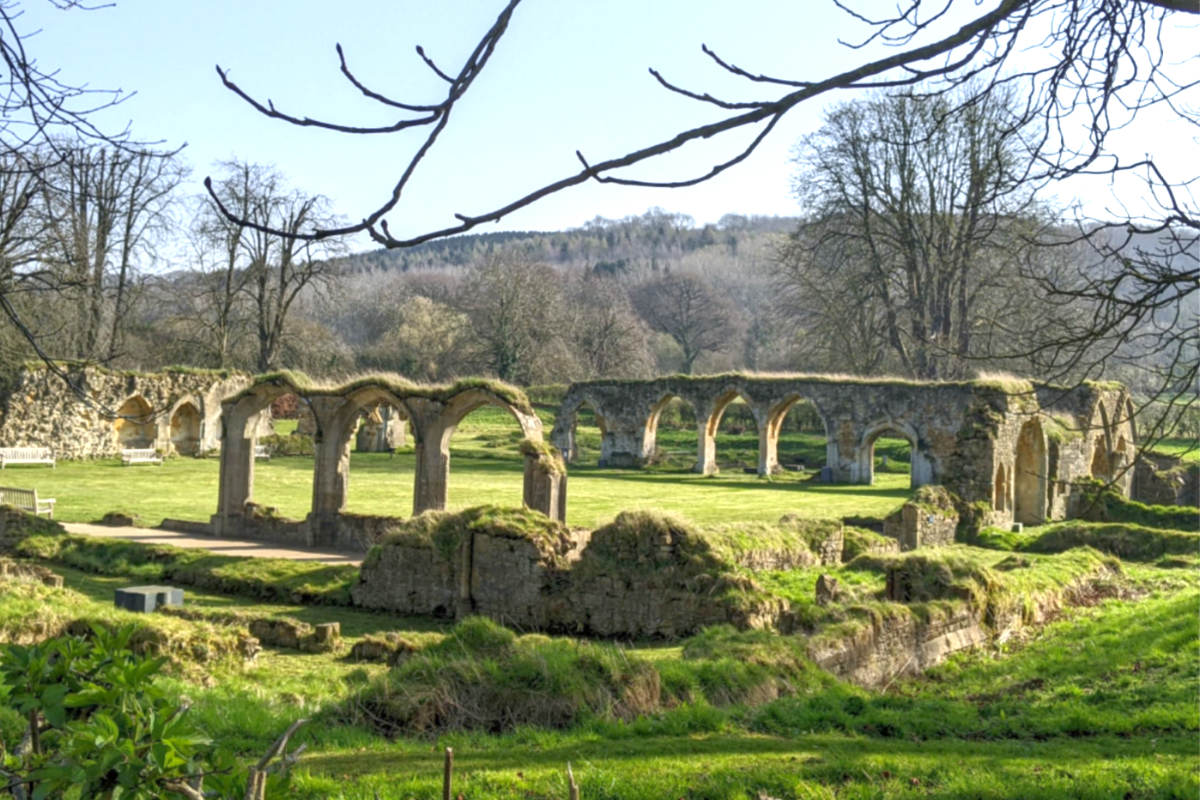
Hailes Abbey
Richard, the Earl of Cornwall, was a younger son of King John and brother to King Henry III. In 1246, he founded Hailes Abbey as thanksgiving for rescue from a shipwreck.
In 1270, Richard's son, Edmund, returned from Germany with a phial of Christ's blood from the Crucifixion which he donated to the Abbey which quickly made it a destination for pilgrims, even warranting a mention in Chaucer's Canterbury Tales.
From the proceeds of pilgrimage, the Abbey was rebuilt on a magnificent scale.
Nowadays, the ruins are a Grade 1 scheduled monument and, with the museum onsite, are run by English Heritage. Open from 1st April, there is a small admission charge.
The Walk
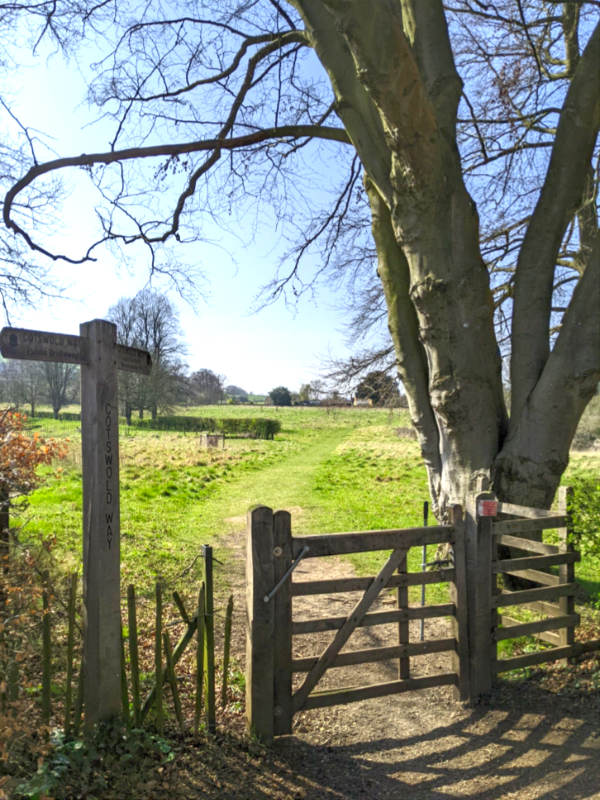
The walk begins opposite the church as you go through the gate signposted 'Cotswold Way'.
After a short walk along a grassed path, you reach a road and turn left. This is Salters Lane and is a straight walk up here for 1 and a half miles to reach the next turn.
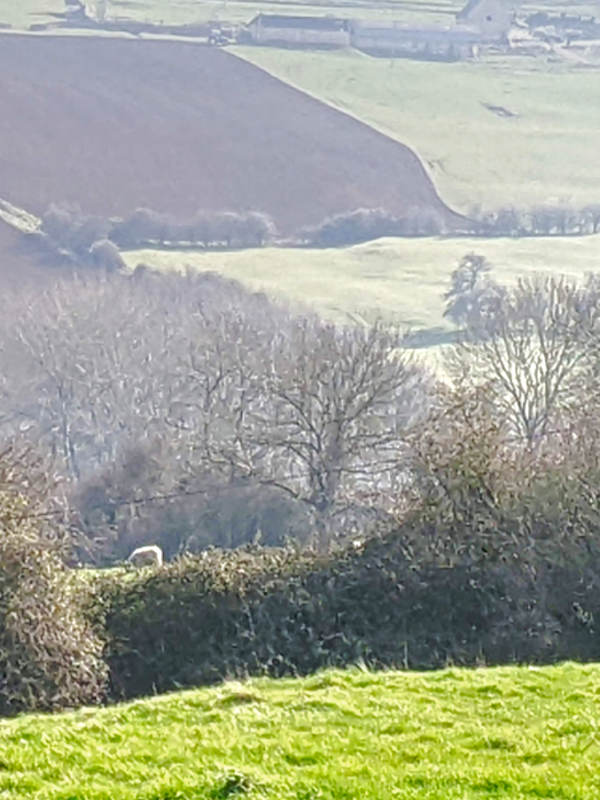
The walk soon turns steep - we weren't sure whether the four buzzards we saw overhead were just biding their time, but we managed in the end! It is well worth the climb to take in the spectacular views.
The road levels out, and you eventually come to a T junction. Turn right here. The road then descends steeply for just over half a mile and at the next junction, turn right again onto Sudeley Hill.
Continue downhill for about 300 yards and turn right into a track signed St. Kenelm's. Avoiding the gates to the private houses and the kennels, keep to the left and walk to the end of the track. Pass through the gate and follow the track to the well.
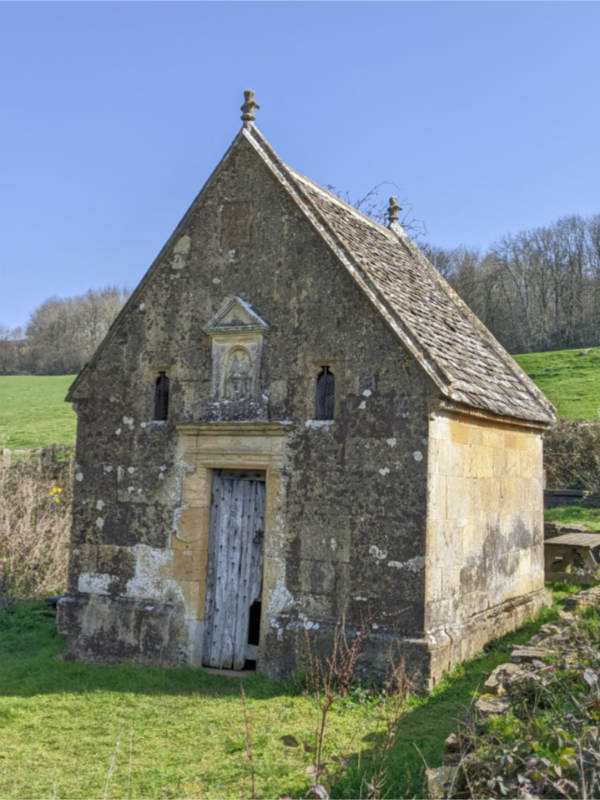
St. Kenelm's Well
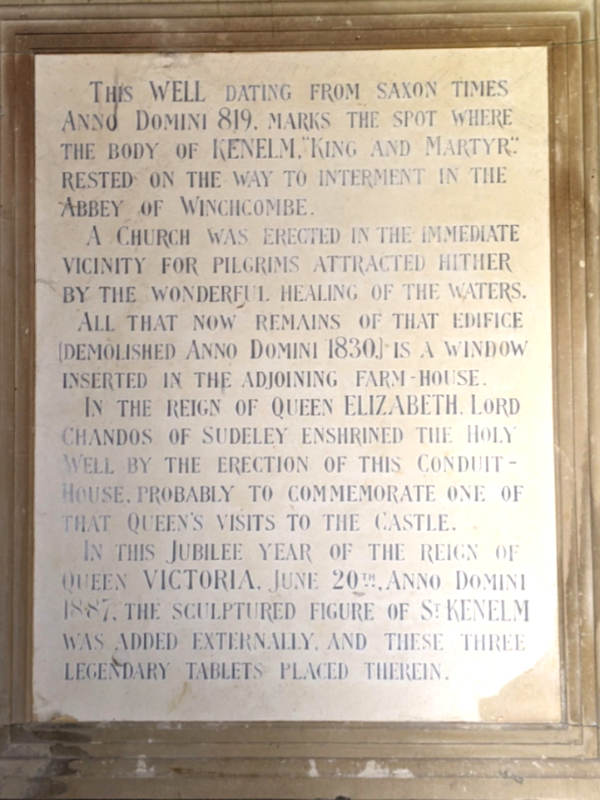
The well head has attracted pilgrims since the 8th century and supposedly marks the spot where the monks taking Kenelm's body back to Winchcombe Abbey for burial were forced to stop through exhaustion. Water sprung up when they stopped and they were able to continue their journey refreshed after drinking.
Post walk refreshments
On returning to your starting point at the car park, you can either drive up to Hayles Fruit Farm and Teashop or walk up - it's not far! Here, you can finish your walk with lunch or coffee and cake.
Enjoy!
Sue McGreal
All photos © 2022 Sue McGreal
Related Blogs
2 blogs found


Write a Gloucestershire Blog
Write about things to do in Gloucestershire
You could write a blog about your favourite things to do in Gloucestershire and places to go, or a holiday you've taken in Gloucestershire.
Do you run a business in Gloucestershire?
The Visit Gloucestershire Blog is a great way to let people know about your product or service, or a new business venture.
In fact, write about anything Gloucestershire related!
Write about your love of Gloucestershire, your favourite Gloucestershire walk, places to eat or anything else Gloucestershire related.