Go nuts! Foraging in Gloucestershire
a blog by Lucy Rabone
Lucy takes us on a journey through the lanes of Gloucestershire, and discovers trees, festooned with nuts.
You are here: Home > Visit Gloucestershire Blog > Go nuts! Foraging in Gloucestershire
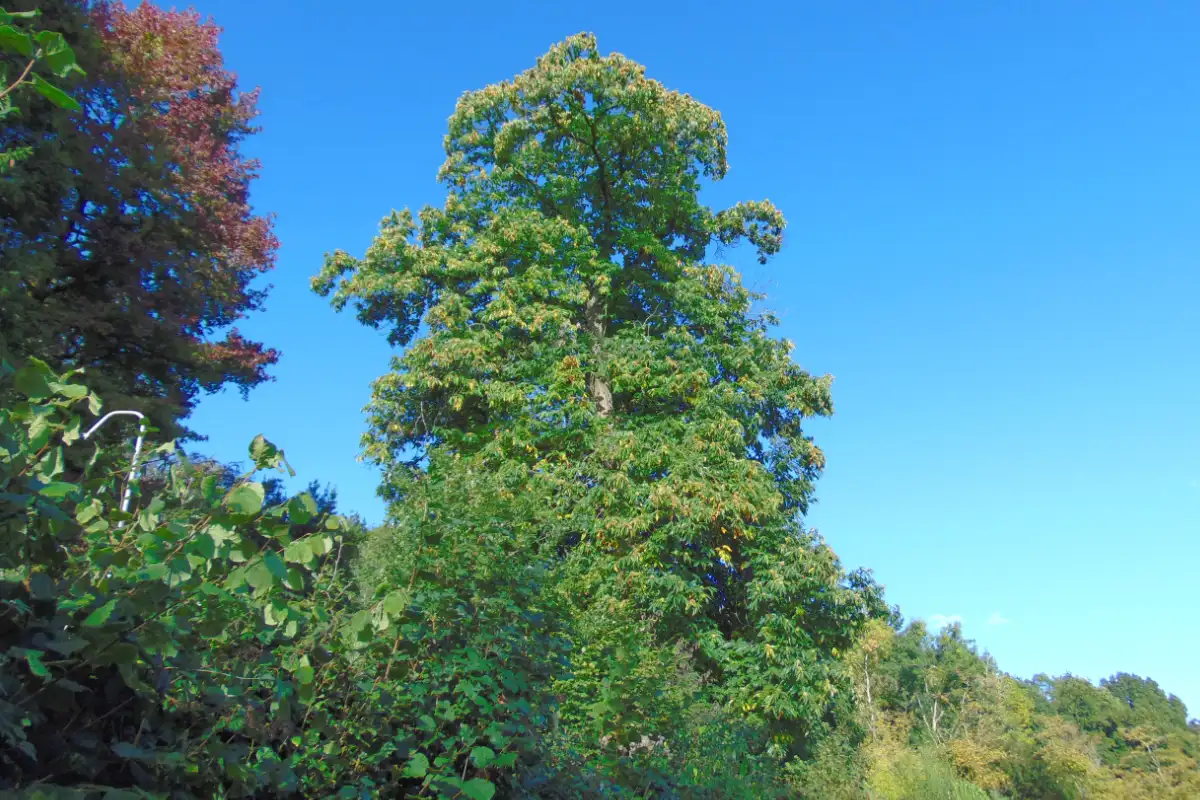
Photo - Lucy Rabone
Looking up at the trees
Published: September 14, 2026
Lucy Rabone
Walking the lanes of the Gloucestershire, I've been noticing the nuts in the trees more and more. From hazelnuts to acorns, beechnuts to sweet chestnuts, and even walnuts - the branches are just brimming with them. I'm usually someone that looks down when walking so as not to step in something stinky, or trip over a twig! But I've now been taking time to look up at the trees, festooned with nuts.
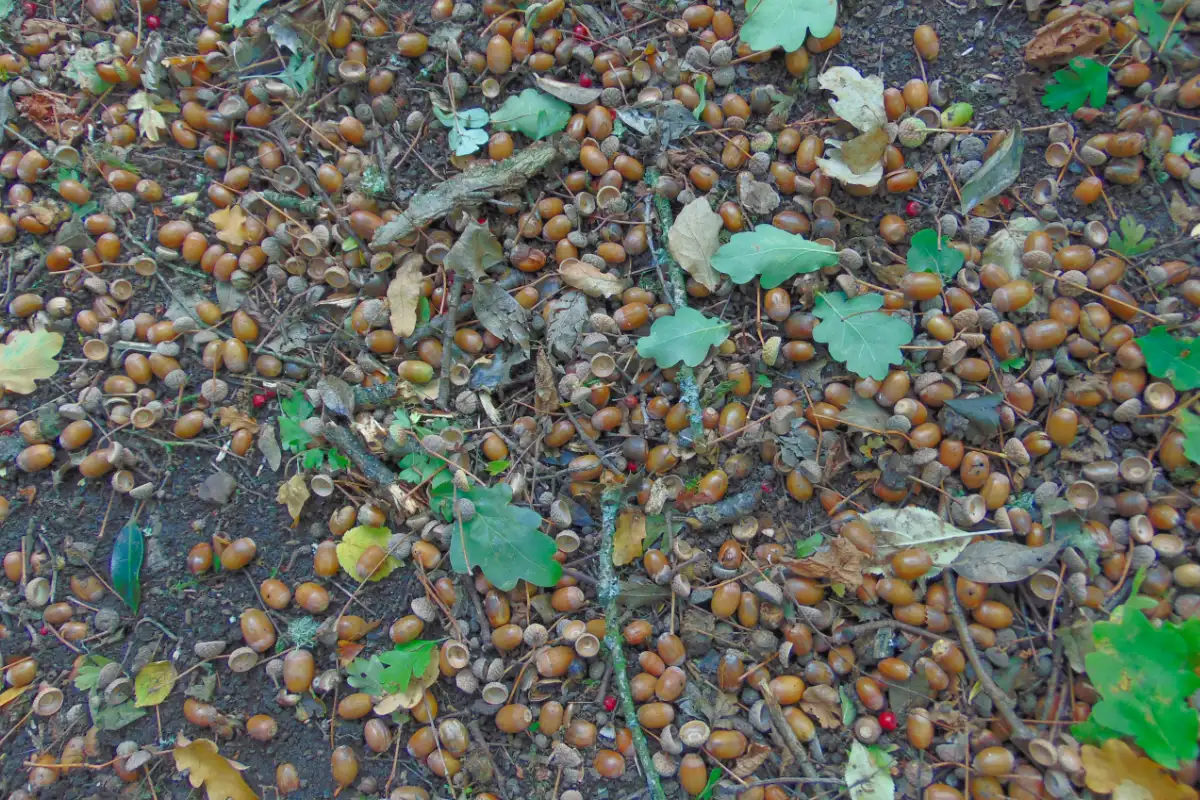
Photo - Lucy Rabone
What is a mast year?
Last year, due to the summer being so hot and dry, reaching just over 33 degrees Celsius in the Wye Valley, it was a mast year, perfect for nut foraging.
This is something I'd heard talked about on the radio, but didn't quite understand. Owen Phillips from the Woodland Trust was able to explain: "Every few years, some species of trees and shrubs produce a bumper crop of their fruits or nuts. The collective term for these fruits and nuts is 'mast', so we call this a mast year."
I found out that mast years happen every few years, and according to the BBC, are thought to be nature's ancient way of ensuring the survival of certain species of trees and small mammals: "Wildlife feed on the acorns and beech nuts and, during the mast year, there will be in increase in the population of some of these animal species. The leftover nuts can go on to develop into saplings meaning new trees start to grow. Conversely, when there is a smaller crop for a few consecutive years, the trees are effectively keeping the populations of small mammal species in check."
While Dr Andrew Hacket Pain from the University of Liverpool said: "Oak trees produce a similar number of flowers each spring, but the autumn's acorn crop depends on how many of these mature into ripe acorns. Rainfall and temperature patterns are an important part of that process, with warm and dry springs - just as we have seen in 2025 - promoting the pollination of oak flowers."
Why is it a bumper year for acorns? - BBC Weather
Good for you
But as well as keeping the trees thriving, nuts are so good for humans. They provide all manner of nutrients, and are bursting with fibre, protein and vitamins. While they are undeniably high in fat, they also contain unsaturated fats, which are healthy. As well as reducing your risk of type 2 diabetes, heart attacks and high blood pressure, a study of people at high risk of cardiovascular disease found that those who added 30 grams of nuts to their diet every day cut their risk of stroke by half!
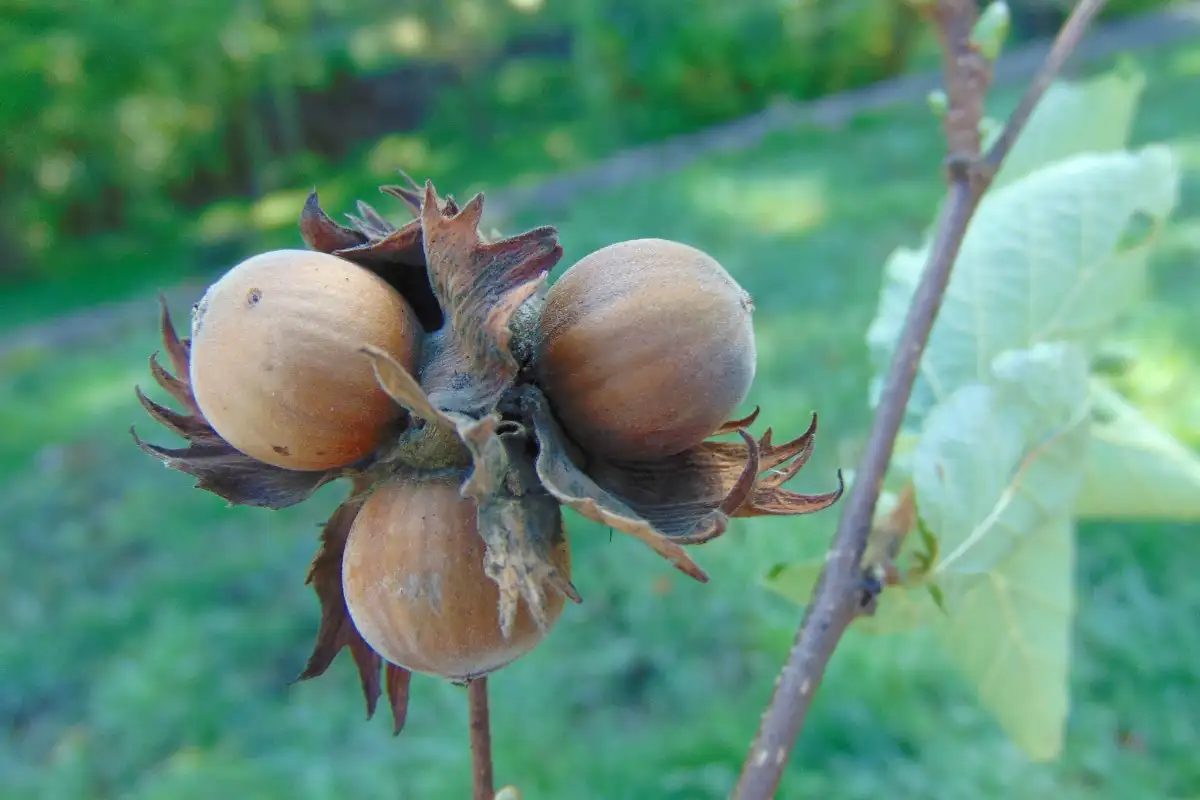
Photo - Lucy Rabone
Trial and error
Hazelnuts
Looking around, I have found that the hedges of Symonds Yat are lined with hazel trees, characterised by their oval, toothed light-green leaves and smooth brown bark. I managed to pick a few hazelnuts in late September, though most had been eaten so there weren't many to choose from, and the tree was starting to grow catkins in their place. Earlier in the summer, I noticed lots of white-green hazelnuts, so when I found some brown ones now, I was quite excited, thinking they must be perfect.
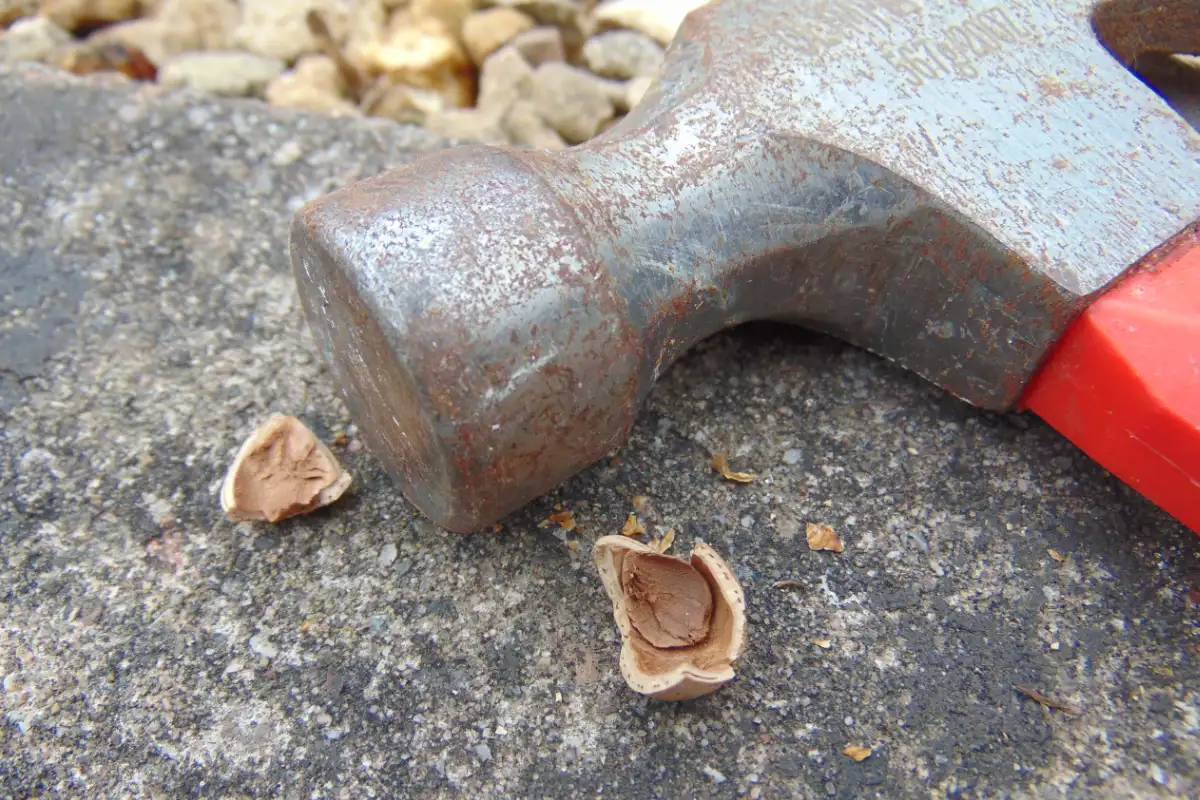
Image: Lucy Rabone
With a light tap of a hammer, I opened a few, and to my dismay, the nuts inside was either mouldy or shrivelled to almost nothing. A quick bit of research showed that you can pick them when green-white and ripen them at home in the sunshine.
Walnuts
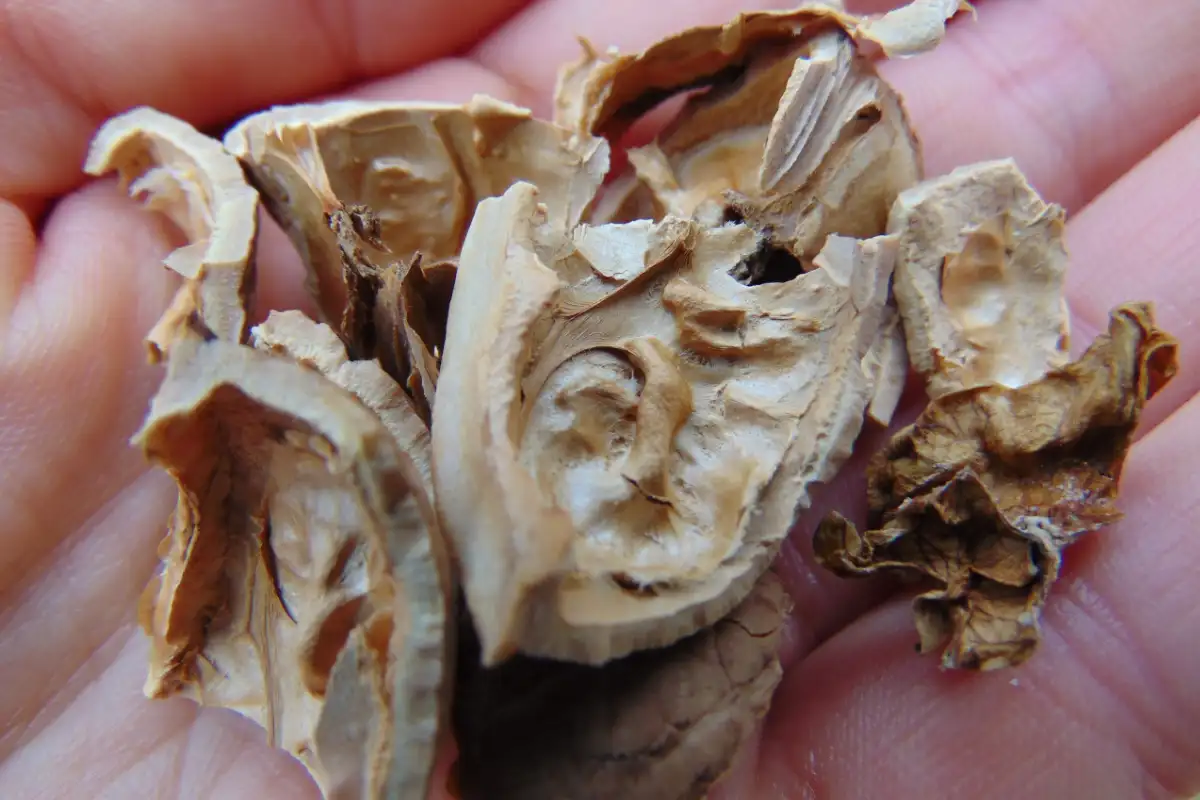
Image: Lucy Rabone
I then turned my attention to walnuts, which are my favourite type of nut, something I regularly buy from the supermarket as a cereal-topper. I managed to find one in the lane while out walking. An accurate tap on the shells seam with a hammer revealed, like with the hazelnuts, a shrivelled inedible walnut. What a disappointment.
Acorns
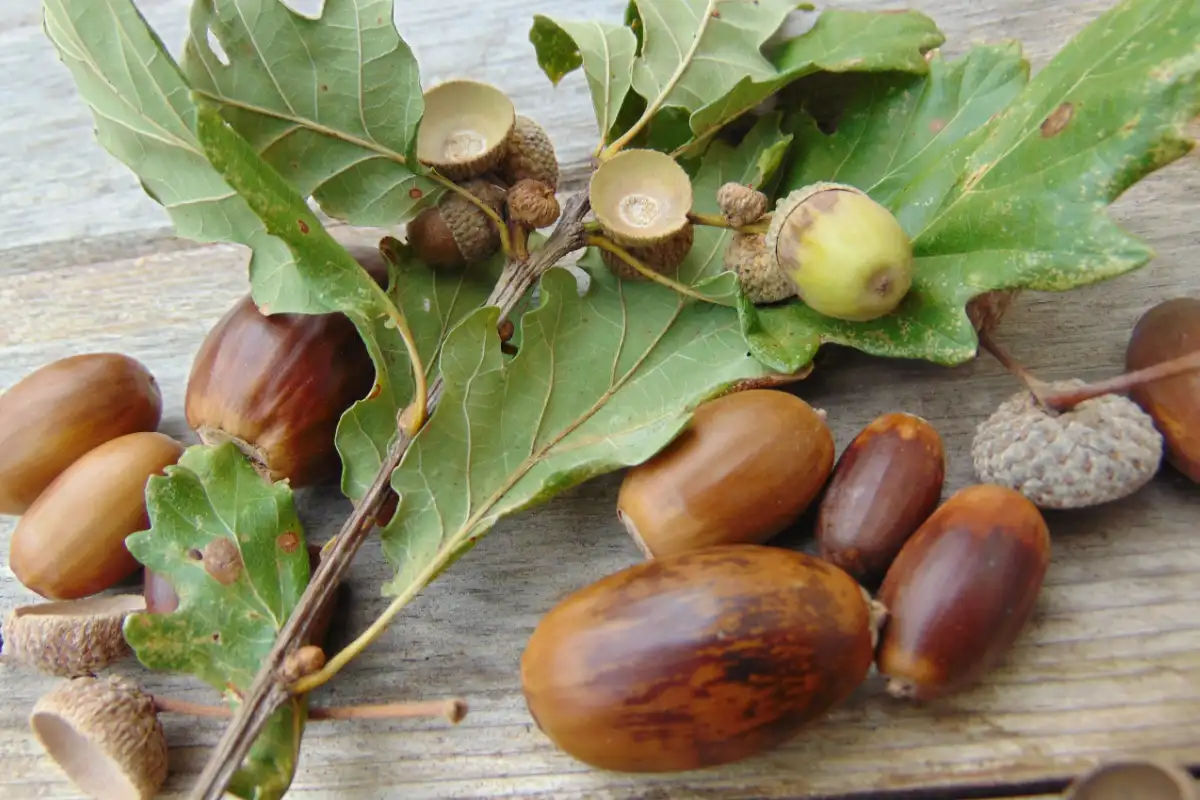
Image: Lucy Rabone
But acorns are littering the lanes and I had always thought they were inedible. However, I learnt from my neighbour who is developing his own self-sufficient lifestyle, that you can eat them if you soak the tannins out of them. Tannins are bitter compounds which although naturally-occuring, make the acorns poisonous.
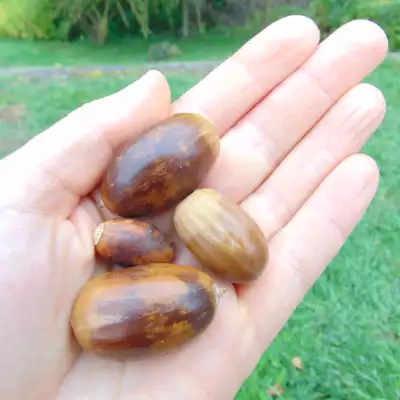
Image: Lucy Rabone
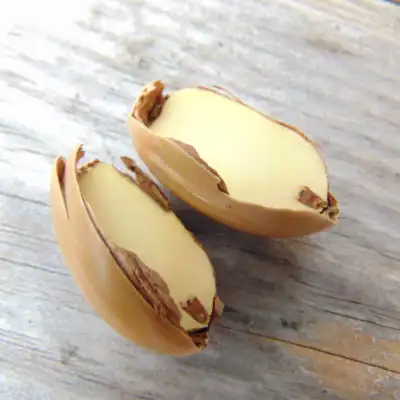
Image: Lucy Rabone
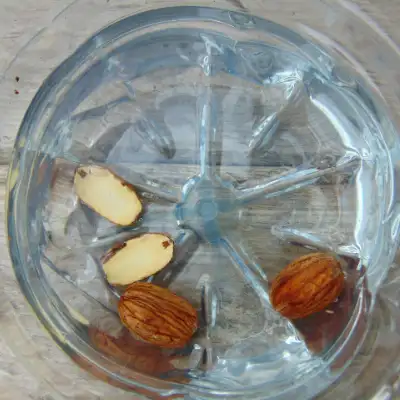
Image: Lucy Rabone
So I collected a small handful of acorns, laid them out to dry in a sunny spot on my window sill to crack them and then pulled the nut meat out. This then went into a small container of cold water. After a matter of hours, the water was tinted with yellow, showing that the tannins had started to leach out. Then the water had to be changed regularly over a few days, until it ran clear, to eventually leave edible acorns. They can then be used in a variety of ways including grinding them into a gluten-free flour, roasting them or drying them to eat as a snack.
Beechnuts
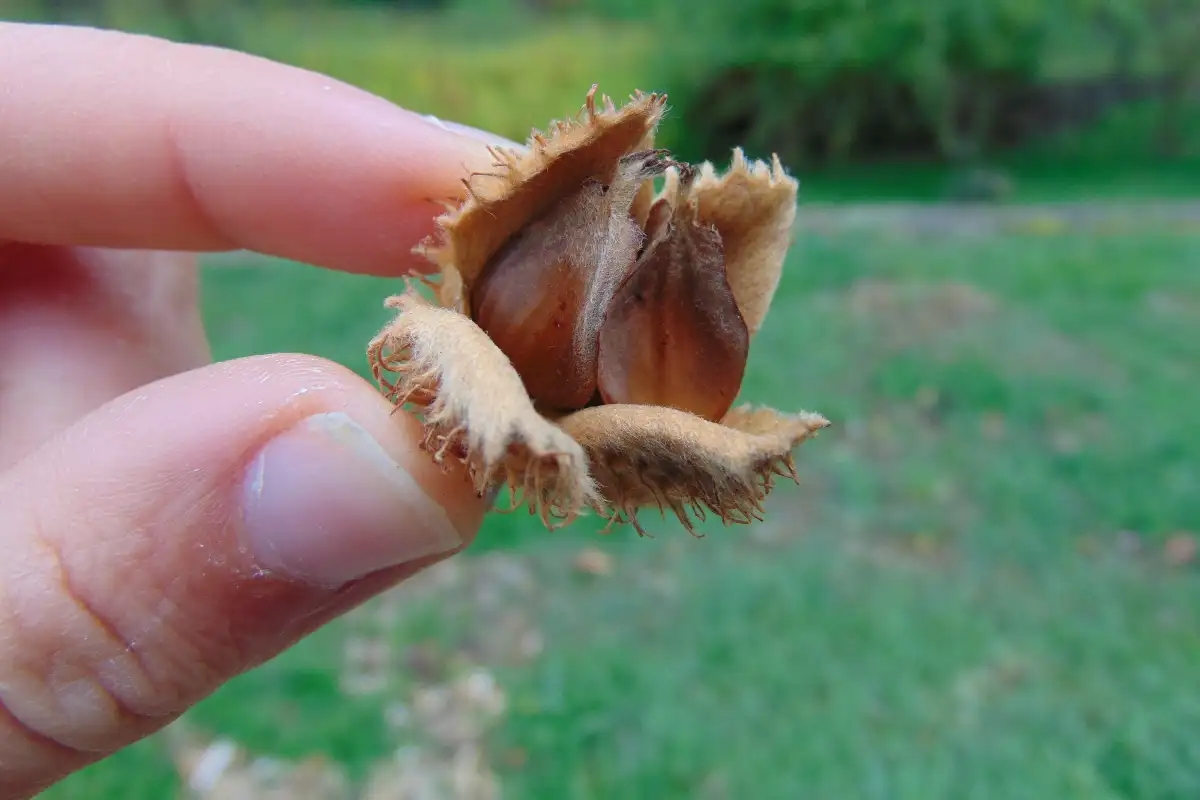
Image: Lucy Rabone
I also discovered some beechnuts which are edible, but must be cooked first due to the toxins contained within. As an important food source for wildlife, I found many husks, but only a few with the nuts still left inside. When I removed the nuts from the husk, and peeled the skin away with my hands, there was unfortunately nothing left inside.
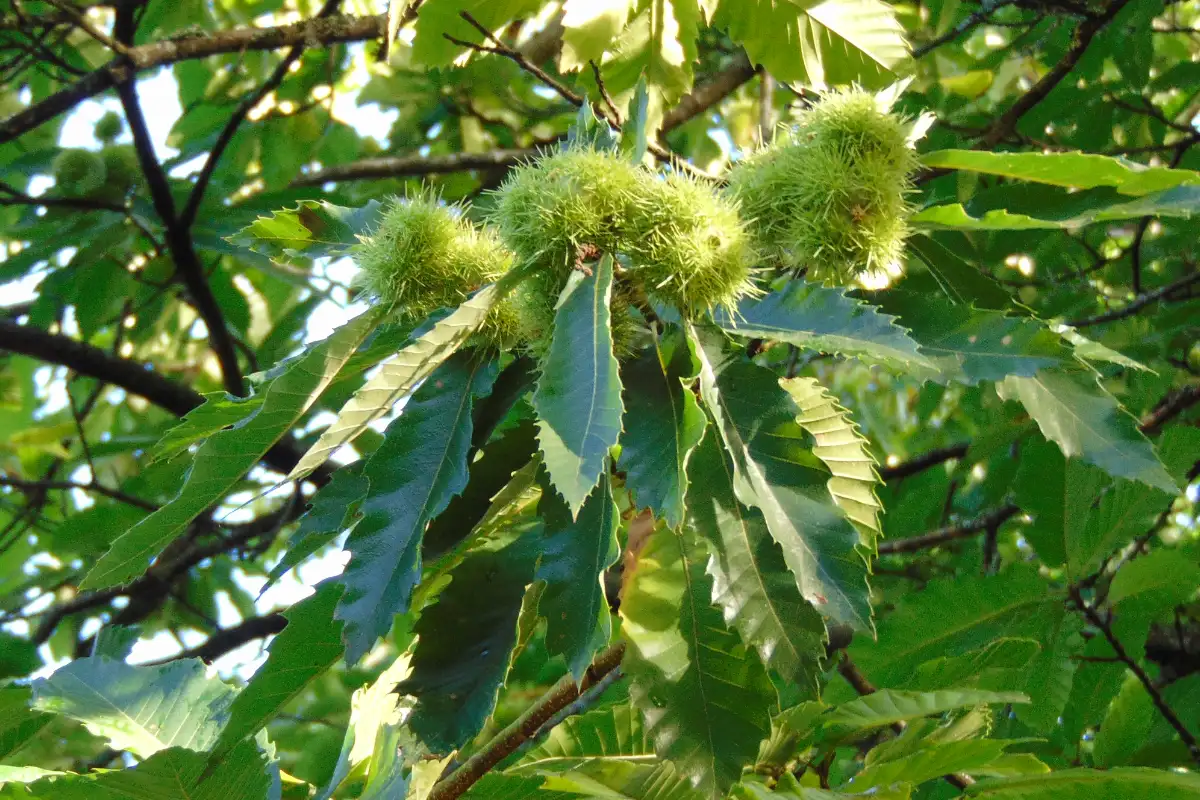
Photo - Lucy Rabone
Sweet chestnut success!
But the headline nut, in the highest quantity and quality in Gloucestershire, were sweet chestnuts.
The Woodland Trust were able to provide some background information about this tree species: "The sweet chestnut is a deciduous tree which can reach 35 metres high when mature and live for up to 700 years (they belong to the same family as oaks and beeches). The bark is grey-purple and smooth, and develops vertical fissures with age, while the twigs are purple-brown and the buds are plum, red-brown and oval in shape.
"Sweet chestnut trees are native to southern Europe, western Asia and North Africa. The story of how they came to be in Britain is unclear. It has long been thought of as a Roman introduction, but science doesn't definitively back this up. It may be that sweet chestnut trees are a far more recent introduction.
"After pollination by insects, female flowers develop into shiny, red-brown fruits wrapped in a green, spiky case. The trees begin to bear fruit when they are around 25 years old.
"Today, they can be found commonly throughout the UK in woods and copses, especially in parts of southern England where it is still managed to form large areas of coppice."
Sweet Chestnut (Castanea sativa) - Woodland Trust
My neighbour John Blows grew up during World War II and recalled foraging for food during rationing, as he and his siblings were usually a bit hungry. He commented that this year the sweet chestnuts will be much bigger and tastier, so on that advice, I decided I would collect some on the morning dog walk.
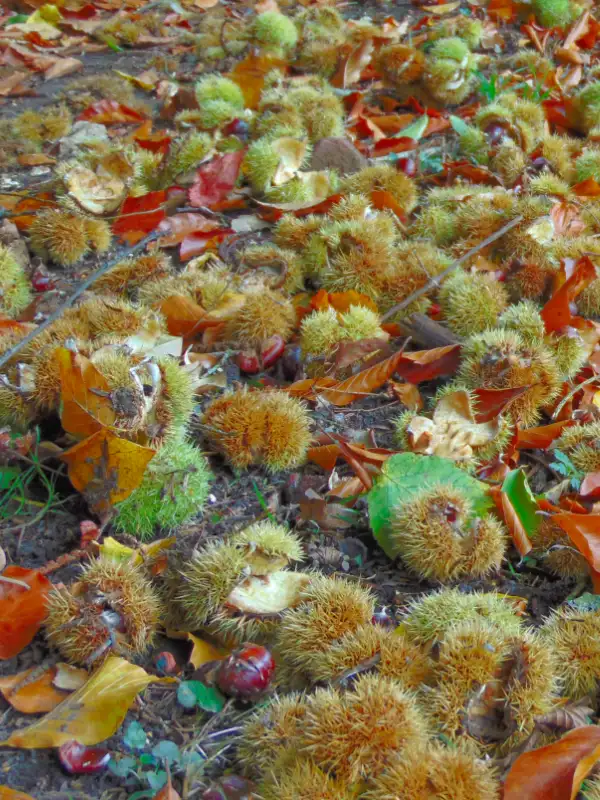
Image: Lucy Rabone
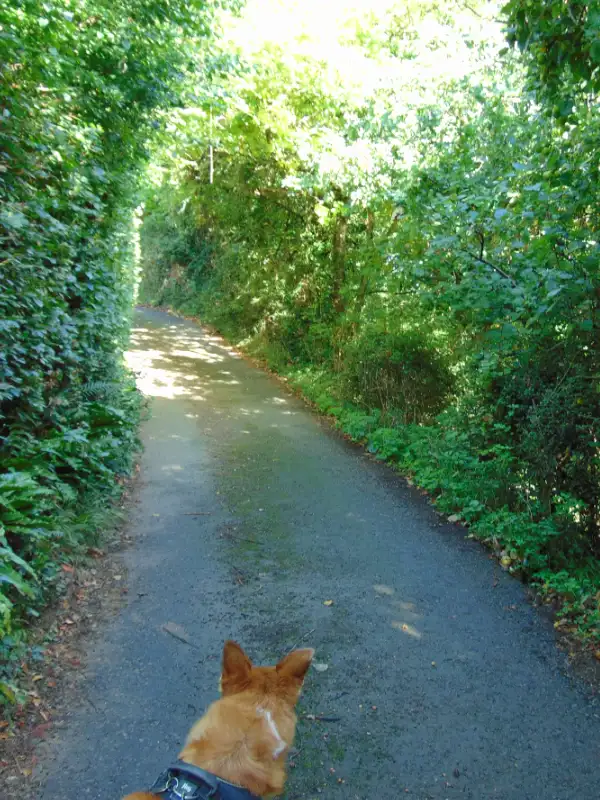
Image: Lucy Rabone
Sweet chestnuts are heavily abundant in the trees, and also appear to be drowning the lanes near my house. They lie on the ground as a spiky lime-green carpet, much to Freddie's horror when he steps on one and has to hop for the next few seconds (after bringing them in the house, he now has a full-on phobia of 'hedgehogs' as we refer to them)!
I had never before considered eating a sweet chestnut. I know they're infamous for being roasted at Christmas time, but does anyone actually eat them? I've never tried them, and always just considered them food for the squirrels.
Growing in the towering sweet chestnut trees, the nuts look like baubles decorating the twigs. But at around 60 foot feet high, unless I'm feeling brave and want to start climbing, I would have to pick them up from where they had fallen. So I found a collection on the ground beneath a tree and started the put them into a cotton bag I had brought with me just for the job. Of course, the cactus-like spikes poked through. Next time, I'll use a bag that's a bit tougher! I did neglect to pack any gloves and I can tell you now, my hands were tender and red for quite a while afterwards.
How to open a sweet chestnut
Being a nut novice, I would have to do some research. Some of the cases were already open, some half open, but some were completely sealed. How on earth do you get a sweet chestnut out of its prickly case without looking like a pin cushion?
Well, the Washington Chestnut Company advised to never pick sweet chestnuts from the tree, as this damages the branches, and to leave any closed nuts on the floor (though I did take some closed ones home, which after being forgotten in the cotton bag for a couple of days, naturally opened to reveal the ripened nuts).
Washington Chestnut Company - Harvesting and Handling Chestnuts
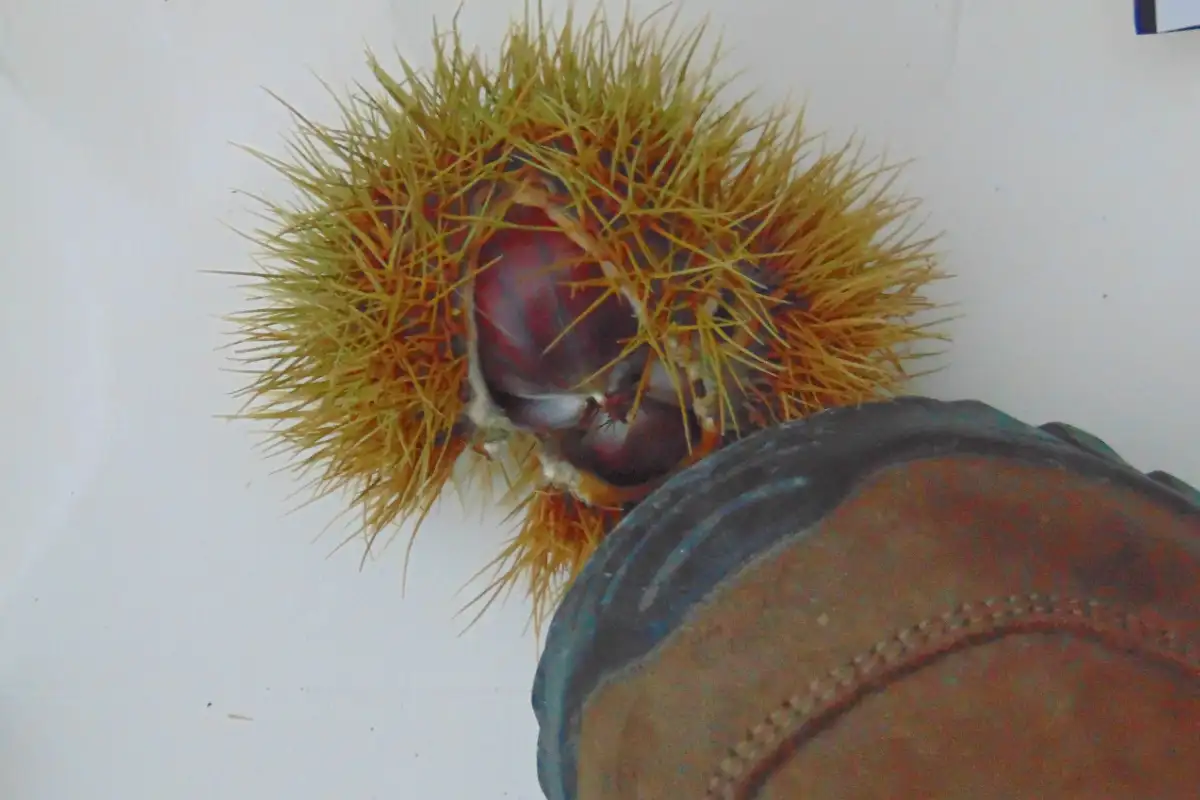
Image: Lucy Rabone
Opening a half-opened sweet chestnut is actually easier than you would have thought. I imagined you would have to use a sharp knife to slice through, and I even watched YouTube videos of people fighting with a hammer and pair of tongs, trying to prise them out. But the most simple way is to roll the sweet chestnut case under your foot, applying a small amount of pressure, and the three shiny brown nuts will escape from the case.
Cooking sweet chestnuts
Though they can be eaten raw, it isn't recommended, due to the risk of stomach irritation. They can be traditionally roasted, boiled, microwaved or baked. But I decided that the most natural way of cooking them, was by fire.
So to begin with, I washed the sweet chestnuts, scored an 'x' a third of the way into the rounded face with a knife, which ensures the chestnuts don't explode when heated and pop the log burner glass! They were then wrapped in a foil parcel. After lighting the log burner, and allowing it to reach 200 degrees Celsius, I placed the foil parcel in the fire. It was left there in the flames for 20 minutes, a little more brief than is recommended, but the fire started to get much hotter, and so they would be ready sooner.
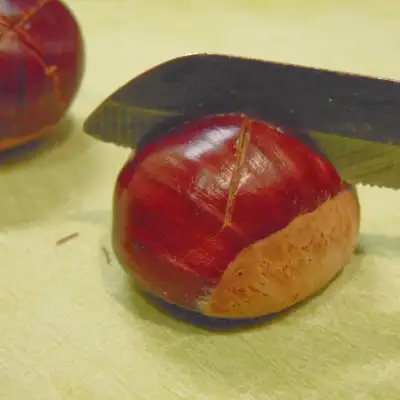
Image: Lucy Rabone
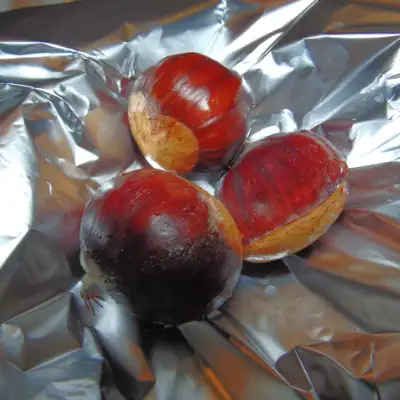
Image: Lucy Rabone
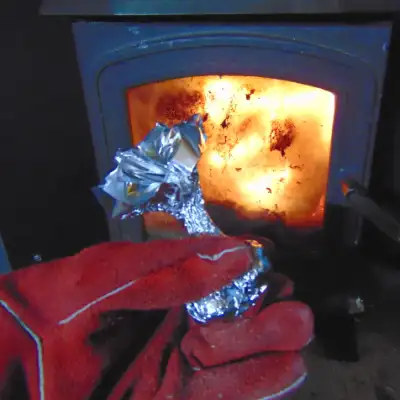
Image: Lucy Rabone
Taking them out of the fire, using some handy welding gauntlets, I cooled them on a plate on the hearth (remembering not to unwrap the foil just in case it spits)! Once cool, they could be unwrapped, letting the smokey and coffee-like aroma fill the room. The shell had shrunk away, meaning it could be broken off by hand, leaving the skin, which was shaved off using a butter knife.
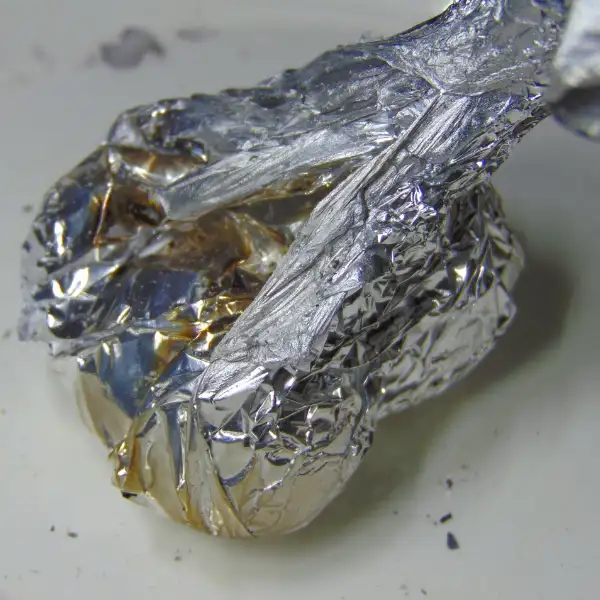
Image: Lucy Rabone
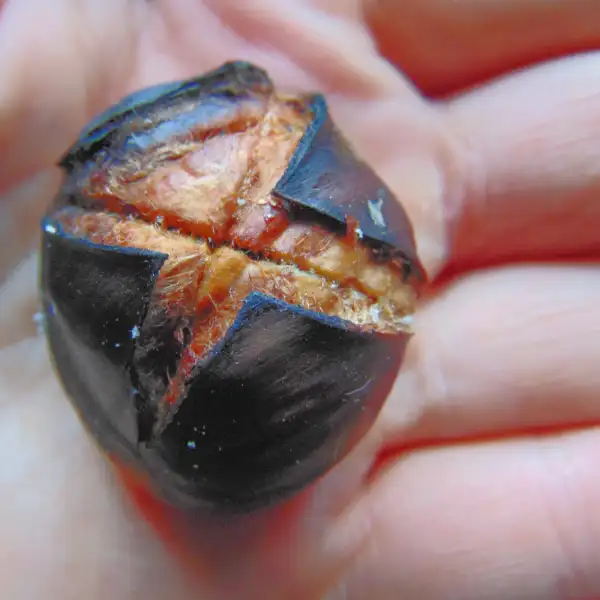
Image: Lucy Rabone
The smell, even after washing your hands a few times, lingers. As for the taste, it is exactly as you would expect from the name - slightly sweet, slightly nutty, but with a potato-like texture. The perfect healthy evening snack - they are rich in vitamin C, and are in fact the only nut that is. Freddie did look keen to try one, but wasn't allowed just in case he choked!
And just remember, leave some for the wildlife!
It's been a learning curve, but I will definitely keep looking up at the trees and what they have to offer. But most importantly, if you do decide to forage for some sweet chestnuts, or indeed any other type of nut - please leave some for the wildlife. They are a food source for red and grey squirrels, deer, wild boar, jays, pigeons, as well as many species of moths and other insects. So don't go stripping the trees!

Write a Gloucestershire Blog
Write about things to do in Gloucestershire
You could write a blog about your favourite things to do in Gloucestershire and places to go, or a holiday you've taken in Gloucestershire.
Do you run a business in Gloucestershire?
The Visit Gloucestershire Blog is a great way to let people know about your product or service, or a new business venture.
In fact, write about anything Gloucestershire related!
Write about your love of Gloucestershire, your favourite Gloucestershire walk, places to eat or anything else Gloucestershire related.